
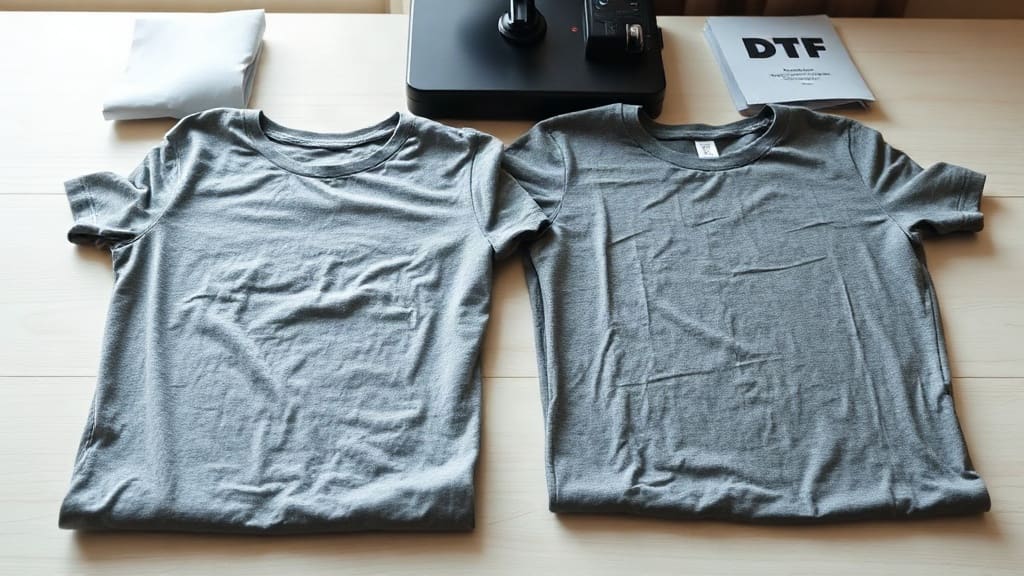
If you have been in the custom apparel game for more than a minute, you know that the blank you choose can make or break a DTF transfer job. Two names that keep popping up in supplier conversations are smart blanks and shaka wear. Both have loyal followings, but they serve different needs. I have pressed hundreds of transfers onto both, and the differences go beyond fabric weight. This article breaks down what actually matters when you are running a shop or ordering for a team.
Why the Blank Matters for DTF Transfers
DTF transfers have changed the game for small and mid-sized apparel businesses. They let you print full-color, photographic designs without the setup costs of screen printing. But the transfer is only half the equation. The blank tee determines how well the transfer adheres, how it feels, and how long it lasts. A great transfer on a poor blank will crack, peel, or look washed out after a few wears. That is why the choice between smart blanks and shaka wear is not just about price per unit. It is about the final product your customer receives.
Smart Blanks: The Underdog with a Following
Smart blanks have carved out a niche among decorators who want a reliable, mid-weight tee without the premium price tag. The brand focuses on consistency, and that consistency shows up when you are pressing DTF transfers. The fabric is typically a cotton-poly blend, which gives it a smooth surface that transfers love. I have found that smart blanks hold up well to repeated washings, with minimal fading or cracking, provided you follow the transfer instructions.
Fabric and Fit
Most smart blanks tees come in a unisex cut with a modern, slightly tapered fit. The cotton-poly blend (often 60/40 or 50/50) offers a soft hand feel that rivals more expensive brands. For DTF transfers, the poly content is a plus because it helps the adhesive bond without requiring excessive pressure or heat. The surface is smooth, not too textured, which means your transfer details stay crisp.
How Smart Blanks Handle DTF Transfers
When I press DTF transfers onto smart blanks, I use a temperature of 325°F for 15 seconds with medium pressure. The results are consistently good. The transfer adheres evenly, and the colors pop. One thing to watch: because the fabric is a blend, you might need to pre-press for a few seconds to remove moisture. That step is non-negotiable if you want to avoid ghosting or uneven adhesion. After pressing, the transfer feels flexible and moves with the shirt. No plastic-y feel.
Durability and Wash Testing
I ran a wash test on a smart blanks tee with a full-color DTF transfer. After 20 washes inside out, cold water, and tumble dry low, the transfer showed minimal cracking. The edges stayed intact. The fabric itself held its shape, with only slight shrinkage (about 3%). For a blank at this price point, that is impressive. It tells me that smart blanks are a solid choice for promotional wear, team uniforms, and retail-inspired lines where you need a balance of cost and quality.
Shaka Wear: The Heavyweight Contender
Shaka wear has a reputation for heavy, durable tees that feel substantial. Their classic tee is 100% cotton and often weighs in at 6.0 oz or more. That weight appeals to customers who want a premium, structured look. But does that weight help or hurt with DTF transfers? It depends on your process. Heavier cotton can require more heat and pressure to get the transfer to sink in properly. If you are not careful, you can end up with a transfer that sits on top of the fabric and peels. However, when done right, the result is a rugged, long-lasting garment that feels like it will survive anything.
Fabric and Fit
Shaka wear tees are known for their boxy, relaxed fit. They are not slim or tapered. That makes them a favorite for streetwear and workwear. The 100% cotton fabric is ring-spun, which gives it a soft but dense feel. For DTF transfers, the cotton surface is actually easier to adhere to than a poly blend, but the weight means you need to adjust your press settings. I usually go up to 350°F for 20 seconds with firm pressure. The extra time and heat ensure the adhesive penetrates the fibers.
How Shaka Wear Handles DTF Transfers
Pressing DTF transfers onto shaka wear requires a bit more finesse. Because the cotton is heavy, moisture can be trapped, leading to steam and uneven adhesion. Always pre-press for 10 seconds to remove moisture. After pressing, let the shirt cool completely before peeling the film. If you peel too early, you risk lifting the transfer. When done correctly, the transfer bonds well and feels integrated into the fabric. The colors remain vibrant, though the heavy cotton can make the transfer feel slightly stiffer than on a lighter blend. That is a trade-off many are willing to make for the durability.
Durability and Wash Testing
My wash test on a shaka wear tee with a DTF transfer showed excellent durability. After 20 washes, there was no cracking or peeling. The fabric softened slightly but kept its shape. The transfer remained intact, with only minor fading. The heavy cotton did shrink a bit more (around 5%), so keep that in mind when sizing. Overall, shaka wear is a beast for longevity. If your customers want a tee that feels like it will last for years, this is a strong candidate.
Head-to-Head Comparison: Smart Blanks vs Shaka Wear for DTF
Let us break down the key factors.
- Fabric weight: Shaka wear is heavier (6.0+ oz) vs. smart blanks (usually 4.5-5.5 oz). Heavier feels more premium but may be too warm for summer.
- Fabric content: Smart blanks often uses a cotton-poly blend, which can be more forgiving for DTF. Shaka wear is 100% cotton, which requires precise pressing but yields a natural feel.
- Press settings: Smart blanks typically press at 325°F for 15 seconds. Shaka wear needs 350°F for 20 seconds. Adjust accordingly.
- Durability: Both hold up well, but shaka wear has a slight edge in abrasion resistance due to its weight.
- Price: Smart blanks is generally more budget-friendly. Shaka wear costs more per unit but may justify the price with its premium feel.
- Best for: Smart blanks is ideal for high-volume orders, promotional items, and customers who want a soft, lightweight tee. Shaka wear suits streetwear, workwear, and customers who prioritize durability and structure.
Which One Should You Choose?
Your choice depends on your target market and your production capabilities. If you are a small shop doing a lot of DTF transfers and want a blank that is easy to press and kind to your budget, smart blanks is a smart pick. It delivers consistent results without requiring you to babysit the press. On the other hand, if you are catering to a clientele that expects a heavyweight, premium tee, shaka wear will not disappoint. Just be prepared to tweak your press settings and allow for slightly more shrinkage. In my own shop, I keep both on hand. I use smart blanks for quick-turnaround orders and shaka wear for specialty drops where the feel of the shirt is as important as the design.
Frequently Asked Questions
Can I use DTF transfers on both Smart Blanks and Shaka Wear?
Yes, both blanks work well with DTF transfers. The key is to adjust your heat press settings. Smart blanks typically require lower temperature and shorter time, while shaka wear needs higher heat and longer pressing. Always pre-press to remove moisture.
Which blank is better for stretchy designs?
Smart blanks often has a cotton-poly blend that offers more stretch, making it better for designs that need to move with the body. Shaka wear is 100% cotton with less stretch, so the transfer may crack if the shirt is stretched excessively.
Do I need to pre-wash Smart Blanks or Shaka Wear before pressing DTF transfers?
Pre-washing is not required, but pre-pressing is essential. Pre-pressing removes moisture and wrinkles, ensuring the DTF transfer adheres properly. For shaka wear, pre-press for 10 seconds; for smart blanks, 5 seconds is usually enough.
How do I prevent cracking on Shaka Wear with DTF transfers?
Use the correct pressure (firm but not excessive), press at 350°F for 20 seconds, and allow the transfer to cool completely before peeling. Also, avoid over-stretching the shirt when wearing or washing. Wash inside out in cold water and tumble dry low.
Are Smart Blanks or Shaka Wear more cost-effective for bulk orders?
Smart blanks generally has a lower cost per unit, making it more cost-effective for bulk orders where budget is a concern. However, if your customers value a heavyweight, premium tee, shaka wear may allow you to charge a higher price, offsetting the higher blank cost.