
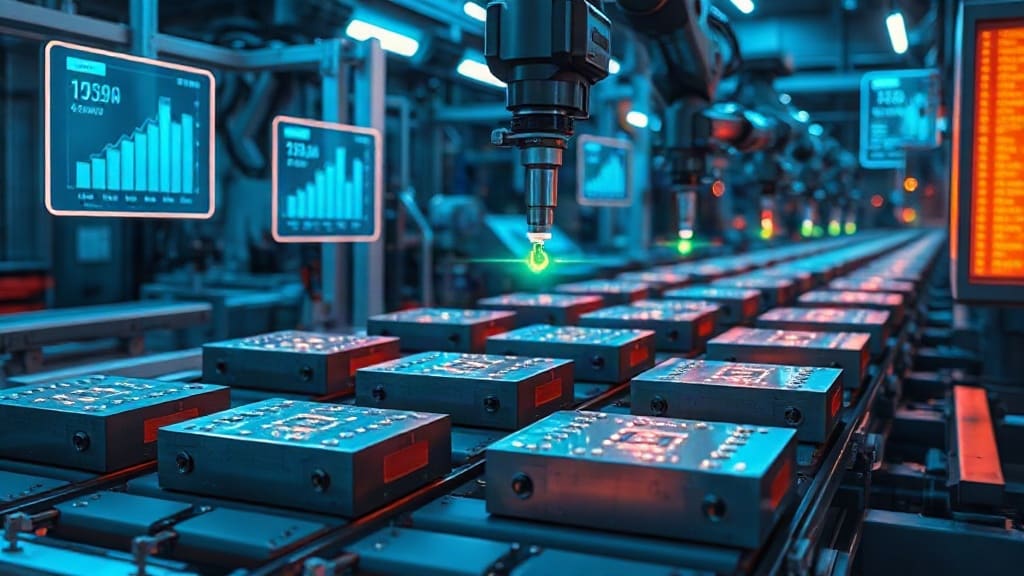
In the high-stakes world of manufacturing, every second and every gram of material counts. Yet, hidden within the production flow lies a game-changing concept that often goes unnoticed: smart blanks. These aren't your ordinary raw materials. They are engineered with intelligence, designed to optimize processes, cut costs, and unlock new levels of precision. Whether you're in automotive, aerospace, or consumer goods, understanding smart blanks could be the difference between staying competitive and falling behind.
What Exactly Are Smart Blanks?
At its core, a blank is a piece of material that's been pre-sized or pre-shaped for further processing. Traditional blanks are passive; they simply wait to be machined, stamped, or formed. Smart blanks, however, come with embedded information or properties that actively influence the manufacturing process. This can mean anything from RFID tags that track provenance to material compositions that respond to temperature or pressure.
Think of them as raw materials with a brain. They can communicate, adapt, and even self-optimize. For example, in sheet metal fabrication, a smart blank might have sensors that detect thickness variations and adjust laser cutting parameters in real time. That level of responsiveness reduces errors and scraps, saving time and money.
The Technology Behind the Intelligence
So, what makes a blank smart? It often involves a combination of advanced materials, embedded sensors, and data connectivity. Some smart blanks use printed electronics, like conductive inks, to create circuits directly on the surface. Others might incorporate QR codes or NFC chips that link to digital twins—virtual replicas that carry a full history of the material.
In more advanced applications, smart blanks can be made from shape-memory alloys or composite materials that change properties under specific conditions. For instance, a smart blank used in aerospace might expand slightly at high temperatures to maintain a perfect seal. These capabilities are not science fiction; they are already being deployed in industries where precision is non-negotiable.
Why Smart Blanks Matter for Your Bottom Line
Adopting smart blanks isn't just about embracing cool tech. It's a strategic move that impacts profitability, efficiency, and sustainability. Here's how.
Reduced Waste and Rework
One of the biggest costs in manufacturing is scrap. A misaligned cut or a wrong material grade can ruin an entire batch. Smart blanks provide real-time feedback that allows machines to adjust on the fly. For example, if a blank detects a flaw in its own structure, it can signal the system to skip it, preventing a faulty part from being produced. This proactive approach slashes rework rates and material waste.
Enhanced Traceability and Quality Control
In regulated industries like medical devices or automotive, traceability is critical. A smart blank can carry a unique identifier that tracks every step of its journey, from raw material extraction to final assembly. If a defect is found later, manufacturers can trace it back to the exact batch and even the specific machine that processed it. This level of granularity not only speeds up recalls but also builds trust with customers.
Streamlined Inventory Management
Imagine a warehouse where every blank knows its own location and status. With smart blanks, inventory counts become automatic and accurate. Workers can locate specific batches instantly, reducing downtime and human error. This is especially valuable for just-in-time production, where having the right material at the right moment is paramount.
Real-World Applications Across Industries
Smart blanks are not a one-size-fits-all solution; they adapt to the needs of each sector. Let's look at a few examples.
Automotive Manufacturing
In car production, smart blanks are used for body panels and structural components. They can be programmed to optimize stamping processes, reducing springback and improving dimensional accuracy. Some manufacturers use smart blanks with embedded sensors to monitor fatigue in critical parts, feeding data back to design teams for continuous improvement.
Aerospace and Defense
Weight and reliability are everything in aerospace. Smart blanks made from titanium or carbon fiber composites can include micro-sensors that monitor stress and temperature during flight. This data helps predict maintenance needs and prevents catastrophic failures. The ability to track a part's entire lifecycle is also crucial for compliance with strict aviation regulations.
Electronics and Consumer Goods
Even in high-volume consumer electronics, smart blanks play a role. For instance, printed circuit board (PCB) blanks might have embedded test points that allow automated optical inspection (AOI) systems to verify quality instantly. This speeds up production and reduces the need for manual checks.
How to Implement Smart Blanks in Your Operation
Transitioning to smart blanks requires careful planning, but the payoff is substantial. Here are practical steps to get started.
- Assess your current pain points. Identify where errors, delays, or waste occur most frequently. Smart blanks are most effective when targeted at specific challenges.
- Choose the right technology. Not all smart blanks are created equal. Decide whether you need simple identification (like QR codes) or advanced sensing capabilities. Consider your existing machinery and IT infrastructure.
- Pilot a small project. Start with a single production line or a limited batch. This allows you to measure impact and iron out issues without disrupting the entire operation.
- Train your team. Smart blanks generate data, and someone needs to interpret it. Ensure operators and engineers understand how to use the new information to make decisions.
- Scale gradually. Once you've proven the concept, expand to other areas. Document best practices and standardize procedures.
Challenges and Considerations
While smart blanks offer numerous benefits, they also come with challenges. The initial cost can be higher than traditional blanks, especially for those with embedded sensors. There's also the need for compatible reading equipment and data management systems. Additionally, some industries may have concerns about data security, particularly if the blanks transmit sensitive information.
However, these hurdles are often outweighed by long-term savings. As technology matures, costs are decreasing, and standards are emerging. It's wise to stay informed and partner with suppliers who specialize in smart blank solutions.
Frequently Asked Questions
What is the difference between a smart blank and a standard blank?
A standard blank is a passive piece of material, while a smart blank includes embedded technology that enables it to communicate, track, or adapt during manufacturing. This intelligence allows for real-time adjustments and data collection.
Can smart blanks be used with existing machinery?
In many cases, yes. Smart blanks are designed to be compatible with common manufacturing equipment, though some may require additional readers or sensors. It's best to consult with your machine supplier to ensure integration.
Are smart blanks cost-effective for small businesses?
While the upfront cost may be higher, smart blanks can reduce waste and improve efficiency, leading to significant savings over time. Small businesses can start with simple solutions like QR-coded blanks to gain traceability without a huge investment.
How do smart blanks contribute to sustainability?
By minimizing scrap and enabling precise material usage, smart blanks help reduce waste. They also support energy efficiency by optimizing processes. Over time, this leads to a smaller environmental footprint.
What industries benefit most from smart blanks?
Industries that demand high precision and traceability, such as automotive, aerospace, medical devices, and electronics, see the greatest benefits. However, any manufacturing sector can gain from improved efficiency and quality control.
Smart blanks represent a shift toward smarter, more connected manufacturing. By embedding intelligence into the very materials we use, we unlock opportunities for greater efficiency, quality, and innovation. As the technology continues to evolve, early adopters will be well-positioned to lead in their respective markets.