
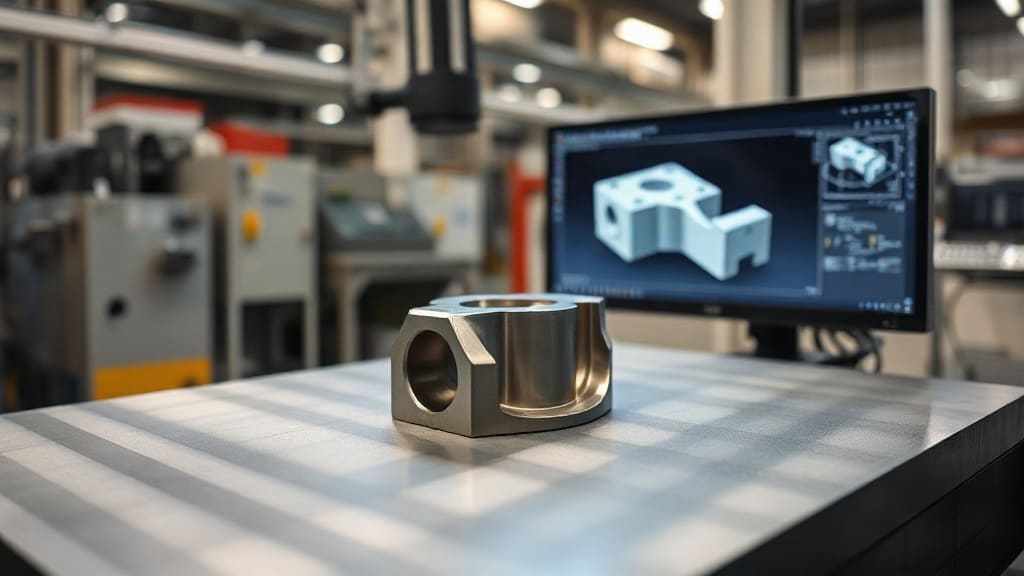
In the world of custom manufacturing, efficiency and precision are paramount. Whether you're producing one-off prototypes or small batches of specialized parts, the traditional approach often involves starting from raw stock and machining away material until you reach the desired shape. This subtractive process, while effective, can be time-consuming and wasteful. Enter smart blanks, a game-changing approach that is redefining how designers, engineers, and machinists bring their ideas to life.
Smart blanks are pre-shaped workpieces that are intelligently designed to minimize machining time and material waste. They are created using advanced techniques such as near-net shape forging, precision casting, or additive manufacturing, resulting in a blank that closely resembles the final part. This means less material removal, faster production, and lower costs. In this article, we'll explore the ins and outs of smart blanks, their benefits, applications, and how you can incorporate them into your workflow.
What Are Smart Blanks?
At their core, smart blanks are intermediate workpieces that have been engineered to reduce the amount of machining required to achieve the final geometry. Unlike traditional blanks, which are often simple shapes like cubes or cylinders, smart blanks are produced with features that are close to the final dimensions. This can include pockets, ribs, bosses, and even complex curves.
The intelligence lies in the design and manufacturing process. Using computer-aided design (CAD) and simulation software, engineers can optimize the blank's shape to minimize material removal while ensuring structural integrity. The blank is then produced using methods like:
- Near-net shape forging: Metal is shaped using dies that are close to the final form, reducing machining.
- Precision casting: Molten metal is poured into molds that produce intricate details.
- Additive manufacturing (3D printing): Material is added layer by layer to create the near-final shape.
These methods yield a blank that is much closer to the finished part, hence the term 'smart'. The result is a significant reduction in machining time, tool wear, and material waste.
Why Smart Blanks Matter in Modern Manufacturing
The adoption of smart blanks is driven by several key advantages that align with the demands of modern manufacturing: speed, cost-efficiency, and sustainability.
Reduced Machining Time and Cost
Machining is often the most time-consuming and costly step in production. By starting with a smart blank, you can cut machining time by 30% to 50% or more, depending on the complexity of the part. This translates directly to lower labor costs, reduced energy consumption, and faster lead times. For businesses, this means the ability to take on more projects and respond quickly to customer demands.
Material Savings and Sustainability
Traditional subtractive manufacturing can waste up to 80% of the raw material as chips. Smart blanks minimize this waste by using only the material needed for the final part. This not only reduces material costs but also supports sustainability goals by conserving resources and reducing scrap. In an era where environmental responsibility is increasingly important, smart blanks offer a tangible way to go green.
Improved Part Quality and Consistency
Because smart blanks are produced with precise methods, they offer better dimensional accuracy and consistency compared to manually prepared blanks. This leads to higher quality parts with tighter tolerances, reducing the need for rework and ensuring that every part meets specifications.
How to Implement Smart Blanks in Your Workflow
Adopting smart blanks requires a shift in mindset and some upfront planning, but the payoff is substantial. Here's a step-by-step guide to integrating them into your manufacturing process.
1. Design for Smart Blanks
The first step is to design your part with smart blanks in mind. This means considering the blank's shape early in the design phase. Collaborate with your CAD designer to create a model that can be efficiently produced as a near-net shape. Use simulation tools to predict machining time and material usage for different blank designs.
2. Choose the Right Production Method
Not all methods are suitable for every part. Evaluate the complexity, material, and quantity of your parts to select the best approach. For metal parts, near-net forging is ideal for high-strength components, while casting works well for intricate shapes. For prototypes or low volumes, 3D printing offers flexibility. Consider working with a supplier that specializes in smart blanks to leverage their expertise.
3. Optimize Machining Strategies
With a smart blank, your machining strategy will change. You'll need less roughing and can focus on finishing passes. Update your CAM programs to take advantage of the near-net shape. This might involve using smaller tools for detailed features and adjusting feeds and speeds for the reduced material removal.
4. Partner with Experts
If you're new to smart blanks, partnering with a company that specializes in their production can accelerate your learning curve. They can provide guidance on design, material selection, and production methods, ensuring you get the most out of this technology.
Real-World Applications of Smart Blanks
Smart blanks are already making waves in various industries. Here are a few examples:
- Aerospace: Turbine blades and structural components are often produced from near-net forgings, reducing machining of high-cost alloys.
- Automotive: Engine blocks and transmission parts benefit from precision castings that minimize machining.
- Medical: Custom implants and surgical instruments are created using 3D printed smart blanks for personalized fit.
- Consumer products: From smartphone casings to kitchen appliances, smart blanks enable efficient mass production with high aesthetic quality.
These examples illustrate the versatility and impact of smart blanks across different sectors.
Challenges and Considerations
While smart blanks offer numerous benefits, there are challenges to be aware of. The upfront cost of creating a near-net shape can be higher than traditional blanks, especially for low volumes. However, this cost is often offset by savings in machining and material. Additionally, designing for smart blanks requires specialized knowledge and may necessitate training or hiring experts. It's also important to ensure that the blank's material properties meet the final part's requirements, as some production methods can affect material integrity.
Despite these challenges, the trend towards smart blanks is undeniable. As technology advances and becomes more accessible, we can expect to see wider adoption and even more innovative applications.
Frequently Asked Questions About Smart Blanks
What exactly are smart blanks and how do they differ from traditional blanks?
Smart blanks are pre-shaped workpieces designed to closely match the final part's geometry, reducing machining. Traditional blanks are simple shapes that require extensive machining. The key difference is the intelligence in design and production, which minimizes waste and time.
Can smart blanks be used for any material?
Smart blanks can be produced from a wide range of materials, including metals, plastics, and composites. The choice of material depends on the application and the production method. For example, near-net forging is common for metals, while 3D printing can handle various polymers and even some metals.
How much can I save by switching to smart blanks?
Savings vary based on part complexity and volume, but many manufacturers report reductions in machining time by 30-50% and material waste by up to 80%. This can lead to significant cost savings, especially for high-volume production.
Are smart blanks suitable for small-scale production or prototyping?
Absolutely. For prototyping, 3D printed smart blanks allow for rapid iteration and testing. For small-scale production, methods like casting or forging can be cost-effective if the design is optimized. The key is to choose the right method for your volume and complexity.
How do I get started with smart blanks for my project?
Start by consulting with a manufacturing expert or a company specializing in smart blanks. They can help you assess your part, choose the best production method, and guide you through the design and implementation process. Many suppliers offer design for manufacturing (DFM) services to ensure your part is optimized for smart blanks.
Embracing smart blanks is a step towards more efficient, sustainable, and cost-effective manufacturing. As the industry continues to evolve, those who adopt this technology early will gain a competitive edge. Whether you're a small workshop or a large enterprise, smart blanks offer a pathway to smarter production.