
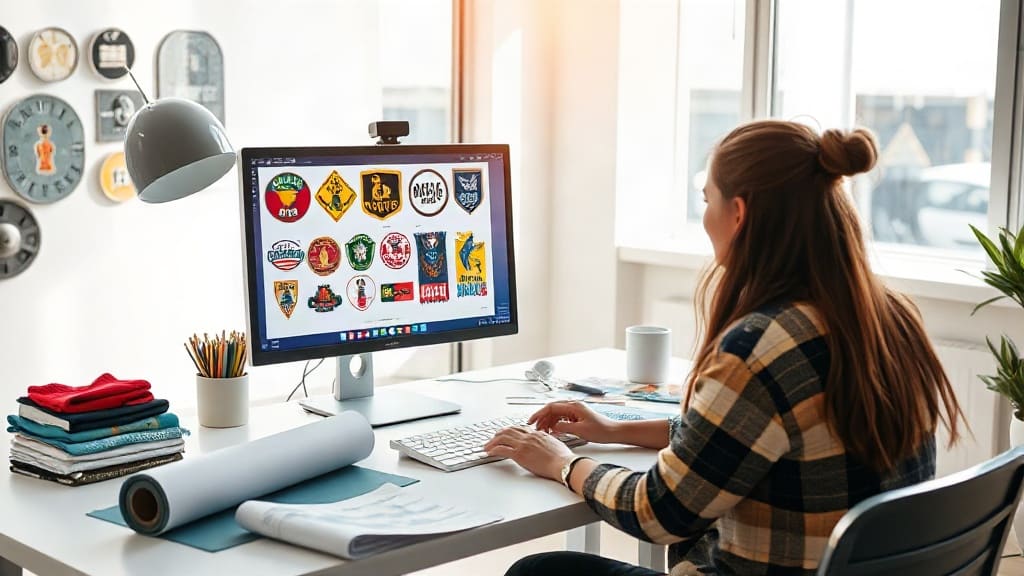
Are you looking for a low-risk way to start an online business? Print on demand (POD) is one of the most accessible models for entrepreneurs and creatives. You don't need to hold inventory, pay for expensive equipment, or risk unsold products. Instead, you design products, and a third-party supplier prints and ships them to your customers after they place an order. This method has exploded in popularity, and for good reason: it's flexible, scalable, and requires minimal upfront investment.
But with so many POD products available, what should you focus on? Two categories that often get overlooked are custom patches and custom banner. These items are perfect for niche audiences, from sports teams and military units to businesses and event organizers. In this guide, we'll walk you through everything you need to know about selling these products using a print on demand model.
Why Choose Print on Demand?
Starting a business has never been easier, but that doesn't mean it's without risks. Traditional retail requires inventory, storage space, and a lot of capital. Print on demand eliminates these burdens. Here's why it's a smart choice:
- No inventory: You only produce items after a customer orders, so you never have unsold stock.
- Low upfront cost: You don't need to buy bulk quantities or expensive machinery.
- Flexibility: You can easily test different designs and products without committing large sums.
- Global reach: You can sell to customers worldwide, and the POD service handles shipping.
- Focus on creativity: Your job is to design and market, not to manage production logistics.
By incorporating custom patches and custom banner into your POD lineup, you tap into markets that are often less saturated than t-shirts or mugs, giving you a competitive edge.
Getting Started with Custom Patches
Custom patches are embroidered or woven emblems that people attach to clothing, bags, hats, or gear. They're popular among motorcycle clubs, scouting groups, sports teams, corporate employees, and fashion enthusiasts. Because they're small and lightweight, they're also inexpensive to ship, which is a bonus.
Types of Custom Patches
Before diving in, understand the different types of patches you can offer:
- Embroidered patches: The classic choice, with raised threads and a soft feel.
- Woven patches: Flatter and more detailed, ideal for small text or intricate logos.
- Chenille patches: The fuzzy, retro style often found on letterman jackets.
- PVC patches: Durable, waterproof, and 3D, perfect for outdoor or tactical use.
- Leather patches: A premium look for denim or workwear.
Each type has its own appeal, but for a start, focus on embroidered and woven patches since they're the most common. You can always expand later.
Design Tips for Custom Patches
Your designs must translate well to embroidery. Here are some key points:
- Keep it simple: Avoid overly complex details that get lost at small sizes.
- Use bold colors: Embroidery threads have a limited palette, so choose colors with high contrast.
- Limit text: If you include words, keep them short and use a font that's easy to read.
- Consider the shape: Standard shapes like circles and rectangles are easier to produce, but custom shapes are possible with a die cut.
- Think about the background: Merrowed borders are common, but you can also have a cut edge for a more modern look.
Finding a Supplier
Most print on demand platforms don't offer custom patches. You'll need to find a supplier that specializes in patches and offers dropshipping or low minimum quantities. Some options include:
- Specialized patch manufacturers that offer no-minimum or low-minimum orders.
- Marketplaces like Etsy where you can partner with a maker.
- Broker services that connect you with overseas factories.
When choosing a supplier, consider turnaround time, shipping costs, and the quality of their embroidery. Order samples before committing to a large partnership.
Exploring Custom Banners
Custom banner is a broad category that includes vinyl banners, fabric banners, table throws, and even yard signs. These are used for advertising events, trade shows, storefronts, birthdays, and more. They're a high-value product because customers are willing to pay more for large, printed items.
Popular Banner Products
In the POD space, you can offer several types of banners:
- Vinyl banners: Durable and waterproof, ideal for outdoor use.
- Fabric banners: Wrinkle-resistant and reusable, often used for indoor events.
- Table covers: Branded tablecloths for events and exhibitions.
- Flags: Feather flags or teardrop flags for storefronts.
- Backdrops: Large printed backgrounds for photo booths or stages.
Vinyl and fabric banners are the most straightforward to start with because they have standard sizes and production methods.
Designing Custom Banners
Banner printing has different requirements than embroidery:
- Use high-resolution images: Since banners are large, your artwork must be at least 150 DPI at actual size.
- Keep important elements away from edges: Most printers require a safety margin to avoid cutting off content.
- Choose the right finish: Hemmed edges with grommets are standard, but you can also offer pole pockets for easy mounting.
- Consider the environment: Indoor banners can use lighter materials, while outdoor ones need UV-resistant inks.
Finding a Print Partner
Unlike patches, many large print on demand companies offer banners. For example, popular POD services like Printful and Printify include a variety of banner products. They integrate with e-commerce platforms like Shopify, Etsy, or WooCommerce, making it easy to automate orders.
However, if you want more customization options, you might work directly with a local print shop that offers dropshipping. This can be beneficial for shorter turnaround times and lower shipping costs, especially if you target a local audience.
How to Sell Custom Patches and Banners
Once you've sourced your products, it's time to create your online store and start marketing. Here's a step-by-step approach:
Choose Your Sales Channels
- Your own e-commerce site: Platforms like Shopify or WooCommerce give you full control and higher margins.
- Marketplaces: Etsy, eBay, and Amazon allow you to reach a large audience but have fees and competition.
- Social commerce: Use Instagram and Facebook Shops to sell directly from your social media profiles.
Many sellers start with a marketplace to test demand, then build their own site later. For a POD business, having your own site with integration to your supplier is efficient.
Create Compelling Listings
Your product listings should be clear and persuasive:
- Use high-quality mockups that show the patch or banner in real-life settings.
- Describe the product's features, materials, and possible use cases.
- Include size charts for patches and specify banner dimensions.
- Mention customization options, such as adding text or choosing colors.
- Optimize your listings for search engines by using relevant keywords.
Price Your Products Right
Pricing is crucial. You need to cover your costs and make a profit while staying competitive. For patches, the production cost might be $3 to $8, and you can sell them for $15 to $25. Banners have higher costs, say $20 to $70, and you can price them at $50 to $150 or more depending on size and material. Always factor in shipping, platform fees, and your time.
Marketing Your Print on Demand Business
Without marketing, even the best products won't sell. Here are effective strategies:
Leverage Social Media
Visual platforms like Instagram and Pinterest are perfect for showcasing patches and banners. Post photos of your products in use, share behind-the-scenes of the design process, and engage with your audience. Use relevant hashtags, such as #custompatches or #vinylbanners.
Build an Email List
Offer a discount or a free resource in exchange for email subscriptions. Send regular newsletters with new designs, special offers, and helpful content related to your niche. For example, if you target sports teams, share tips on designing team logos.
Collaborate with Influencers
Reach out to influencers in your niche. A small patch company might send free samples to a popular hiking blogger or a banner creator might partner with event planners. User-generated content can be powerful.
Run Paid Ads
Once you have a winning product, invest in paid ads. Use Facebook and Instagram ads to target specific demographics. For banners, you might target business owners or event planners. For patches, target hobbyists or groups.
Scaling Your Business
As your sales grow, you'll want to scale your operations. Here are some ways to do that:
- Expand your product range: Add new patch styles or banner types based on customer requests.
- Automate your processes: Use apps that connect your store to your supplier and handle order tracking.
- Outsource design work: If you're overwhelmed, hire freelance designers to create new artwork.
- Consider local production: For banners, having a local print shop can reduce shipping times and costs.
Common Mistakes to Avoid
Even experienced sellers make mistakes. Here are a few to watch out for:
- Poor quality control: Always order samples to check the product quality before selling.
- Ignoring customer service: Respond promptly to questions and address issues quickly.
- Underpricing your products: Don't be afraid to charge what your items are worth.
- Neglecting SEO: Optimize your website and product pages for search engines to get organic traffic.
Success Stories and Inspiration
Many entrepreneurs have built successful POD businesses with custom patches and custom banner. For example, a small Etsy shop selling military patches might grow to a full-time income. A company that started with simple vinyl banners for local events could expand to nationwide distribution. The key is to find a niche you're passionate about and serve it well.
Conclusion
Starting a print on demand business with custom patches and custom banner is a fantastic way to enter the e-commerce world. With low risk, high potential for creativity, and a growing market, you can turn your designs into a profitable venture. Remember to focus on quality, understand your customers, and continuously refine your marketing. Now is the perfect time to take the first step. Choose your niche, create your first design, and launch your store.
Frequently Asked Questions
Do I need to have design skills to sell custom patches and banners?
No, you don't need to be a professional designer. You can use tools like Adobe Illustrator, Canva, or even hire freelancers from platforms like Fiverr or Upwork to create your designs. Many POD services also offer design templates that you can customize with your own text and images.
How much money do I need to start a print on demand business?
You can start with as little as $50 to $100. This budget would cover the cost of a domain name, a monthly website subscription (if you choose to use Shopify or similar), and ordering a few sample products. Unlike traditional retail, you don't need to spend thousands on inventory.
How long does it take to receive custom patches or banners?
Production times vary by supplier and product. Patches typically take 5 to 10 business days to produce, while banners might take 2 to 5 days. Shipping time depends on your location and the carrier. Always check your supplier's estimated production and delivery times so you can set accurate expectations for your customers.
Can I sell custom patches and banners on marketplaces like Etsy?
Yes, absolutely. Etsy is a great platform for selling handmade and personalized items, including custom patches and custom banner. You can set up a shop and list your products with detailed descriptions and photos. Just be aware that Etsy charges listing and transaction fees, so factor those into your pricing.
What is the profit margin on custom patches and banners?
Profit margins vary depending on your pricing strategy, production costs, and platform fees. On average, you might see a 30% to 50% profit margin. For example, if a patch costs you $5 to produce and you sell it for $15, your gross profit is $10, which is a 66% margin. For banners, a $30 cost could sell for $80, giving you a 62% margin. Just remember to account for shipping and other expenses.