
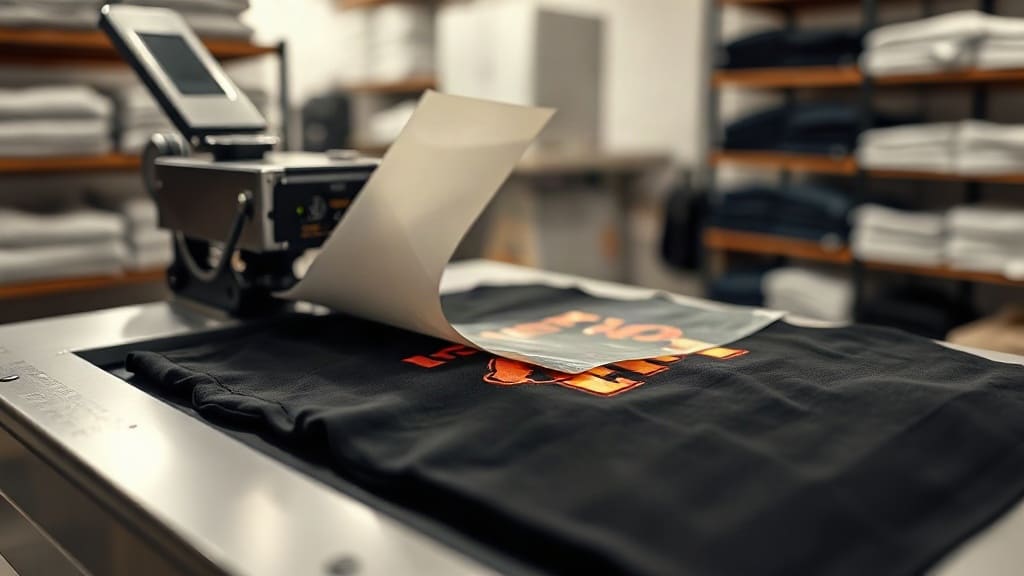
If you have spent any time in a print shop lately, you have probably heard someone rave about DTF transfers. Direct-to-film has moved from a niche experiment to a mainstream decoration method in just a few years, and for good reason. It lets you print full-color artwork onto almost any fabric without the setup costs of screen printing or the limitations of vinyl cutting. This guide walks through how the process actually works, where it shines, and the small details that separate a crisp, durable print from a cracked, faded mess.
What Are DTF Transfers and How Do They Work?
A DTF transfer is a printed design that starts life on a special PET film rather than directly on a garment. The workflow is straightforward once you understand the layers involved.
First, a printer lays down CMYK inks plus white ink onto the film. The white layer is what makes the design opaque on dark shirts. Next, a thermoplastic powder is sprinkled over the wet ink and then cured, usually in a heat press or a dedicated powder shaker. That powder becomes the adhesive that bonds the print to fabric. Finally, the transfer is placed on the garment and pressed, and the film is peeled away once it cools.
The key difference from DTG is the intermediate step. Because the design sits on film, you can print it anywhere, store it, ship it, and press it later. That flexibility is why small shops and large operations alike have adopted DTF transfers so quickly.
Why DTF Transfers Have Become So Popular
There is no single reason DTF took off. Several advantages stack up at once.
- Fabric versatility: Cotton, polyester, blends, nylon, canvas, and even leather can all take a DTF print.
- No color limits: You are not paying per screen, so a 12-color design costs the same as a one-color design.
- Low minimums: You can print one transfer or a thousand without changing your setup.
- Storage and shipping: Transfers can be boxed, mailed to customers, or kept on a shelf for months.
- Stretch and recovery: Modern films and powders handle reasonable stretch without cracking.
Compare that to screen printing, where each color adds a screen, a setup charge, and a chance for misregistration, and the appeal becomes obvious.
Choosing the Right Film and Powder
The materials you pick matter more than most beginners expect. A cheap film can curl, jam, or leave a haze on the garment. A mismatched powder can fail to cure properly and wash out after a few cycles.
Film Options
Single-sided matte film is the workhorse for most shops. It releases cleanly and holds fine detail well. Double-sided film can speed up production but requires more careful handling. For stretchy fabrics, look for films labeled for stretch or recovery. For fine lines and small text, a thinner film usually gives a sharper edge.
Powder Choices
Standard TPU powder is the default for cotton and blends. It cures at moderate temperatures and produces a soft hand. For high-stretch garments, a stretch powder is worth the extra cost. For garments that will see heavy industrial washing, a high-durability powder extends the print life. Always follow the manufacturer's cure temperature, since under-cured powder is the number one cause of wash failure.
Ink Considerations
Not all DTF inks behave the same. Pigment inks with good white opacity are essential for dark garments. If your white ink is thin, you will see the shirt color through the design. If it is too heavy, the print feels stiff. Consistent ink quality is one of the easiest ways to improve your output without changing anything else.
The Pressing Process Step by Step
Pressing is where most problems show up. The variables are few, but each one matters.
- Pre-press the garment for a few seconds to remove moisture and wrinkles.
- Place the transfer with the printed side down on the fabric.
- Press at the temperature recommended for your film and powder, usually between 300 and 330 degrees Fahrenheit.
- Apply medium to firm pressure. Too little pressure leaves the print sitting on top of the fabric.
- Wait for the transfer to cool before peeling. Cold peel is standard for most DTF films.
- If the design needs a second press, cover it with a sheet and press again briefly for a softer hand.
Every press runs a little differently. A cheap infrared press may need a longer dwell time than a high-end pneumatic press. The only way to know your setup is to test.
Common Problems and How to Fix Them
Even experienced operators run into issues. Here are the ones that come up most often.
- Print cracking after washing: Usually under-cured powder or too little pressure. Increase cure time and pressure.
- White ink looks dull: The white layer may be too thin or the ink may be old. Check your ink supply and print a test.
- Transfer peels off in patches: The powder did not fully melt. Raise the curing temperature slightly and verify with a temperature gun.
- Film sticks to the print: The transfer was peeled too hot. Let it cool completely.
- Design feels stiff: Too much powder or too heavy an ink layer. Dial back both.
Keeping a log of settings for each film and powder combination saves hours of guesswork later.
Where DTF Fits in a Print Shop
DTF is not a replacement for every method. It is a complement. Screen printing still wins on large runs of simple designs. DTG still wins on 100% cotton with a soft hand. Embroidery still wins on polos and caps. But for small runs, complex art, dark garments, and stretchy fabrics, DTF transfers often come out ahead.
Shops that mix methods tend to serve more customers with less friction. A customer who wants one custom shirt for a birthday gets a DTF print. A customer who wants 500 event shirts gets screen printing. The same shop can handle both.
Frequently Asked Questions
How long do DTF transfers last on a shirt?
With proper curing and pressing, a DTF print can last through 50 or more wash cycles without significant fading or cracking. Longevity depends heavily on the powder cure and the wash routine. Washing inside out in cold water and avoiding high heat in the dryer extends the life considerably.
Can you use DTF transfers on polyester?
Yes. DTF works on polyester and polyester blends, though lower press temperatures are safer for synthetic fabrics. Some polyesters are sensitive to heat, so testing on a scrap piece first is always wise.
Do DTF transfers work on dark garments?
They do, and this is one of the biggest advantages. The white ink layer provides opacity, so colors stay vivid on black, navy, and other dark fabrics. The key is making sure the white layer is thick enough and fully cured.
What is the difference between DTF and DTG?
DTG prints directly onto the garment and works best on 100% cotton. DTF prints onto film first, then transfers to the garment, which allows it to work on a much wider range of fabrics and colors. DTF also lets you store and ship transfers, while DTG must be printed on demand.
How much pressure should I use when pressing DTF transfers?
Medium to firm pressure is the standard starting point. Too little pressure leaves the design sitting on the surface and prone to peeling. Too much pressure can push the design into the fabric weave and cause a halo. Test on your press and adjust from there.