
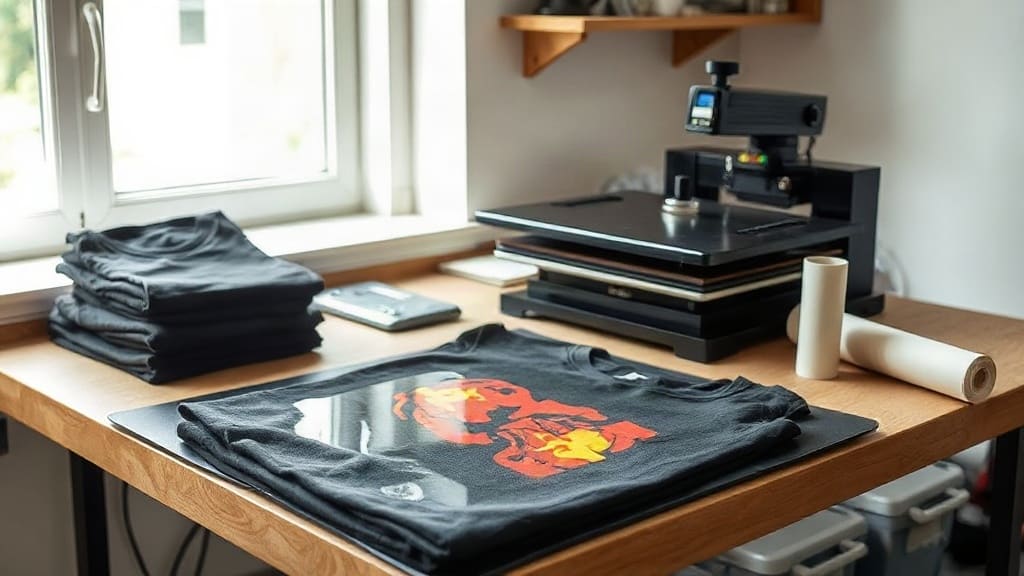
Most print on demand sellers start with the same three options: heat transfer vinyl, sublimation, and a dropship partner that prints everything for them. Then a customer asks for a full-color design on a black hoodie, or a nylon jacket, or a canvas tote, and the usual methods either fail outright or look cheap. That is the moment DTF printing earns its place in a shop. Direct to film transfers handle full-color artwork on almost any fabric, need no weeding, and store flat for months. This guide covers how the process works, where it actually beats the alternatives, and the pricing and shipping details that decide whether it makes money or quietly drains it.
What DTF Printing Actually Is
DTF stands for direct to film. A printer lays your design onto a special PET film using water-based pigment inks, then a powder adhesive is applied over the wet ink and cured. What you end up with is a thin, flexible transfer that carries its own glue. To apply it, you press the film onto the garment, let it cool, and peel the film away. The ink and adhesive stay behind, bonded to the fabric.
The important part is what that structure allows. Because the design sits on film rather than being cut from a roll of colored vinyl, there is no limit on color count, gradients, or fine detail. Because the adhesive is heat-activated rather than fabric-specific, the same transfer works on cotton, polyester, blends, and even materials that would melt under a sublimation press. And because there is no weeding step, a complex multi-color design takes the same labor as a simple one-color logo.
How the Process Works Step by Step
Design preparation
Artwork gets mirrored before printing, since the transfer is flipped when it goes onto the garment. Transparent PNG files at 300 DPI are the standard input. Fine hairlines and very small text are the usual trouble spots: under about 1.5 mm, letters tend to fill in or break apart once pressed. A quick pass to thicken thin strokes saves a lot of reprints.
Printing and powdering
The printer lays down a white ink base first, then the color layer on top. That white base is why DTF transfers show up clearly on dark garments without the washed-out look you get from printing color directly onto black fabric. After printing, the sheet moves through a powder shaker that coats the wet ink with hot-melt adhesive. Excess powder is shaken or vacuumed off, and the sheet is cured.
Pressing onto the garment
A typical press setting is around 150 to 160 degrees Celsius for 10 to 15 seconds at medium pressure. After pressing, the film is peeled once it has cooled, usually 10 to 20 seconds. Peeling hot can stretch the print or pull detail out of the edges. A second short press under a cover sheet, sometimes called a matte or post-press, smooths the surface and improves wash durability.
Storage
Cured transfers keep for months in a cool, dry place, away from direct sunlight and humidity. Storing them flat in a binder or a labeled box makes it possible to print a batch of designs once and press them to order, which is where the real workflow advantage sits for a print on demand shop.
Where DTF Beats Vinyl and Sublimation
It helps to be honest about the trade-offs rather than treating any one method as universal.
- Color complexity: Vinyl requires one cut per color plus alignment, so a five-color design is five passes. DTF prints it in one go.
- Fabric range: Sublimation needs a high polyester content and a light base color. DTF works on cotton, blends, nylon, and canvas.
- Labor per order: No weeding, no layering, no alignment errors. Pressing is the only hands-on step.
- Small details: Photographic images, gradients, and thin outlines hold up far better than with cut vinyl.
The trade-offs run the other way too. Vinyl tends to feel thinner on the shirt and can stretch with the fabric in ways a transfer will not. Sublimation has no hand feel at all because the ink becomes part of the fiber. A DTF transfer sits on top of the fabric, so on very stretchy activewear it can crack over time if the design is large and the press settings are off.
Cost, Pricing, and Where the Margin Goes
The material cost of a DTF transfer depends mostly on its size. A small left-chest logo uses a fraction of the film, ink, and powder that a full back print does. That means pricing by the piece rather than by the order is the only way to stay profitable.
A simple approach is to calculate a cost per square centimeter of film and multiply it by the design area, then add a fixed amount for labor, packaging, and the garment. Many sellers land somewhere between 15 and 30 percent of the retail price as transfer cost for a full front print, which leaves room for the shirt, shipping, and platform fees. If your transfer cost creeps past a third of the sale price, either the design area is too large for the price point or the garment margin is too thin.
Two mistakes show up again and again. First, treating every design as the same cost when a full back print uses four times the material of a pocket logo. Second, forgetting that failed presses, misaligned placements, and returns all consume transfers. Building a small waste allowance into the price is not padding, it is accuracy.
Durability and Wash Care
A properly pressed transfer survives dozens of wash cycles when the garment is cared for sensibly. The failure modes are predictable: washing in hot water, drying on high heat, and ironing directly over the print. Passing that on to customers in a small care card cuts returns and complaints more than any change to the transfer itself.
Inside the wash, turn the garment inside out, use cold water, and tumble dry low or hang dry. If a customer irons the shirt, the print should be covered with a cloth or the shirt turned inside out. None of this is unusual advice, but customers do not know it unless you tell them.
Common Questions About DTF Printing
Can I use DTF transfers on 100 percent cotton shirts?
Yes, and cotton is one of the easiest substrates. The adhesive bonds well to natural fibers, and the white ink base keeps colors bright on dark cotton. Cotton also handles the press heat without the scorching risk you get with some synthetics.
Do I need a special printer to start with DTF?
You can buy a dedicated DTF printer and powder shaker, or you can order transfers from a supplier and only invest in a heat press. Many sellers start by outsourcing the transfers, test which designs sell, and only bring printing in-house once volume justifies the equipment cost.
How long do unused DTF transfers last?
Stored flat in a cool, dry place away from sunlight, cured transfers typically keep for six months or more. Humidity is the main enemy because it can affect the adhesive powder. Sealed bags with a desiccant pack help if you live somewhere damp.
Why does my DTF print crack after a few washes?
Cracking usually traces back to one of three causes: too little pressure during pressing, peeling the film while it is still hot, or skipping the post-press step. Stretching the garment over a large print area also accelerates it. Rechecking pressure and adding a second short press fixes most cases.
Is DTF cheaper than screen printing for small runs?
For small quantities, almost always. Screen printing carries setup costs per color per screen, which only pays off at higher volumes. A DTF transfer costs the same whether you press one piece or fifty, which makes it a natural fit for print on demand where every order can be different.